Tender Topics: Stories of Real Conversations on Vaccinations, Racism, and Identity
Alexia Málaga, MPH, Data Maven
Communications
Vaccinations
Context: I’m in my third trimester of my first pregnancy. COVID is still a major concern despite vaccines being available. A close and well-respected colleague messaged me expressing their concerns about vaccinations and asked about my thoughts, knowing that I’m an epidemiologist. They mentioned the infamous “study” linking vaccines to autism (which has since been disproved and retracted) and vulnerably shared that if they had more information about vaccine risks as a new parent they would not have vaccinated their children. It took time for me to respond because I was upset, disappointed and a bit shocked at their message. I wanted to continue deepening our relationship but was now worried that my strong disagreement would cause friction, so I considered brushing it off. I ultimately decided to respond because I felt so strongly about the topic, I cared deeply about the relationship, and saw this as an opportunity to share helpful and true information.
[BRIDGE] Thanks for asking about my opinion on the topic and being patient with my response, I know you have concerns.
[EXPERIENCE] I support the use of vaccinations, especially for children for the following reasons:
I believe in and prioritize preventive care (over treating established illness/injury) when managing my health and wellbeing. This approach is efficient, cost effective, and generally leads to better health throughout life.
I believe in science and the scientific method. Vaccines are considered one of the Ten Great Public Health Achievements of the 20th century. As a researcher myself, I understand the rigors behind the process of turning ideas into tests into literature into policy and into practice. I trust in this process and am grateful to benefit from medical interventions that others have dedicated their lives to developing.
I understand that my actions impact others. Not everyone can safely receive all vaccinations*; I vaccinate myself to protect those people in my community (in addition to protecting myself). *Some people have allergies to specific ingredients in certain vaccines, and some people have medical conditions in which their immune systems are suppressed such that a vaccine (carrying a very mild/weak version of a certain virus itself) may make that person sick.
There is no scientific substance to the claim that vaccines cause autism. “Studies” have been performed to test the association and have all been rejected by the scientific community for being inadequately run due to falsified data, unethical funding and motivations, and inappropriate interpretation of results due to small study sample sizes.
It’s incredibly unfortunate how emotionally vulnerable families of children on the autism spectrum—who are likely seeking answers/solutions to challenges associated with their child’s medical/behavioral needs—are targeted by these false claims that vaccines cause autism. It creates a black hole in which families may put a lot of their energy into that leads to nothing that actually benefits themselves or their child(ren). People with autism can live full, meaningful lives with enough (and the right kind of) love and support—not to say the duty of raising a child with autism does not have its unique challenges.
More is being learned about the condition as more people are diagnosed due to widespread screening and, generally, a better understanding of the condition among the general population. Autism has been around for a long time, people are just identifying it better now, which is great because once identified, these people can start receiving the support/understanding that they need and deserve.
[BOUNDARIES] I will continue to use my knowledge, intuition and judgement in line with this framework to inform the healthcare decisions I make for myself and my future children.
[INVITATION] If you see public health/health information that you’re curious/dubious about, you can reach out to me, since I am a public health professional and someone who cares about you. (Download Communications)
Race (communications cont.)
Context: In the wake of George Floyd’s murder many close friends and family reached out to connect with me and my partner since we lived in Minneapolis. Many conversations included what seemed like innocuous questions about race. These questions were posed to me, a brown Filipino-Peruvian woman, not to my white European husband. I felt an overwhelming burden to calmly and clearly educate people, all the while I was still enraged and grieving what had just happened. I sent a version of this communication to several of my white friends and family after many days of deep thought. It was exhausting and emotional work, but I valued these relationships too much to be dishonest (i.e. silent). I chose to protect my peace by inviting them into action by sharing resources as opposed to inviting in more personal conversations.
[BRIDGE] Thank you for your openness to engage in dialogue about racism. I hope we keep the conversation going by speaking honestly, listening with compassion, asking questions, and opening our hearts.
[EXPERIENCE] I've been feeling uneasy about a topic discussed last night and need to share my opinion—regarding the belief that we are all the same, all one human race. While this may be the case under spiritual, religious and/or biological perspectives, from a social and cultural perspective the systemic oppression of people of color (POC) makes my experiences vastly different from yours (and other white people's). To say that you don't see my race means you don't see my oppression, my marginalization, or the discrimination I face daily. This diminishes my suffering and excuses people from any moral responsibility to dismantle racism/white supremacy. We must see race to combat racism. Racism affects all people who belong to a racialized society (all of us) and is oftentimes subconscious, undetected, and born out of privilege or apathy. We all have to work to be better—myself included.
[BOUNDARIES] That being said, it takes an incredible amount of emotional energy for me to have these conversations—for a long time I didn't speak up for myself for this reason. For example, I've been drafting this email in my head since 5am. I grew up in a white community and internalized a lot of the discrimination my family and I received. I initially thought I was special because I was "different" but later learned to believe that me being "different" meant that I didn't "belong". I have many white friends, and now family, that love and care about me, however they still regularly unintentionally harm me with their language.
I've just recently developed the courage and confidence to confront loved ones about this and it is incredibly taxing—I need your support. I just ask you to be open to listening and learning. Many friends have shared that they never intend to hurt me, yet they don't take the time to educate themselves to mitigate potential harm they may cause. They move through life as usual and just ask that when I'm offended I let them know. This is unfair, because I am still harmed in the process and then there is an expectation that I must hold them accountable and teach them why what they said is wrong—as if that's an easy thing to do, especially in a society where white voices are considered more important than POC voices.
This is a violent model of education that benefits the person causing the harm and puts displaced accountability (and harm) on the receiver. Additionally, many POC may experience discrimination so regularly that they don't recognize it enough to stand up for themselves (e.g. the case of me as a child)—no accountability is had and racist actions (regardless of intent) persist.
[INVITATION] I'm not asking for sympathy, I'm asking for action. Help mitigate more harm to POC by listening to black/POC voices and read black/POC literature. I wrote a formal statement regarding George Floyd's killing and racism as a public health emergency. I've also included resources for action, anti-racist literature, and resources to teach children about racism (attached). I hope you can find a place in your heart to appreciate my radical honesty. (Download Communications)
Identity (communications cont.)
Context: A close family member who strongly identifies as Christian would regularly talk about getting together for a bible study in a fun and casual way. I never seriously entertained these invitations because I don’t identify as Christian. They messaged me directly with a formal invitation to a recurring gathering with their Christian community members and some of our shared family members. I felt annoyed and frustrated because I don’t like to let this person down—they are incredibly kind and generous. I ultimately decided to respond, not just to the invitation (yes/no) but to the topic as a whole. I felt compelled to be direct about my identity because I didn’t want this to come up again, because we are family and we will continue to see each other.
[BRIDGE] Thank you for the invite to get together with the gals. I appreciate how intentional you are about staying connected with family—your care and consideration do not go unnoticed. While I do enjoy seeing you and the family, I must respectfully decline participating in bible study.
[EXPERIENCE] I was a practicing Catholic for most of my life. My unique and personal experiences as an adult have changed my system of beliefs—I no longer believe in the presence of a God nor do I believe in the absence of a God. What I do believe in are the tangible things in this/my life. I believe in, and have deep respect for, this Earth and the things that comprise/inhabit it (elements, plants, animals, people). I believe in worldly acts of kindness and love between/among beings. I believe in science.
[BOUNDARIES] While I understand that belief in the stories/teachings of the Bible is certainly not criteria to study it, doing so is not an interest or a priority of mine right now. I am satisfied in the peace and guidance my beliefs bring to my life.
[INVITATION] Our beliefs may differ, but I think we still value similar things—love, kindness, and family, to name a few. I respect your beliefs and I respect you. If you ever want to have interfaith discussions, I’m more than happy to participate. (Download Communications)
Figures
Figure 1. Engagement assessment and decision tree (Download Figure 1)
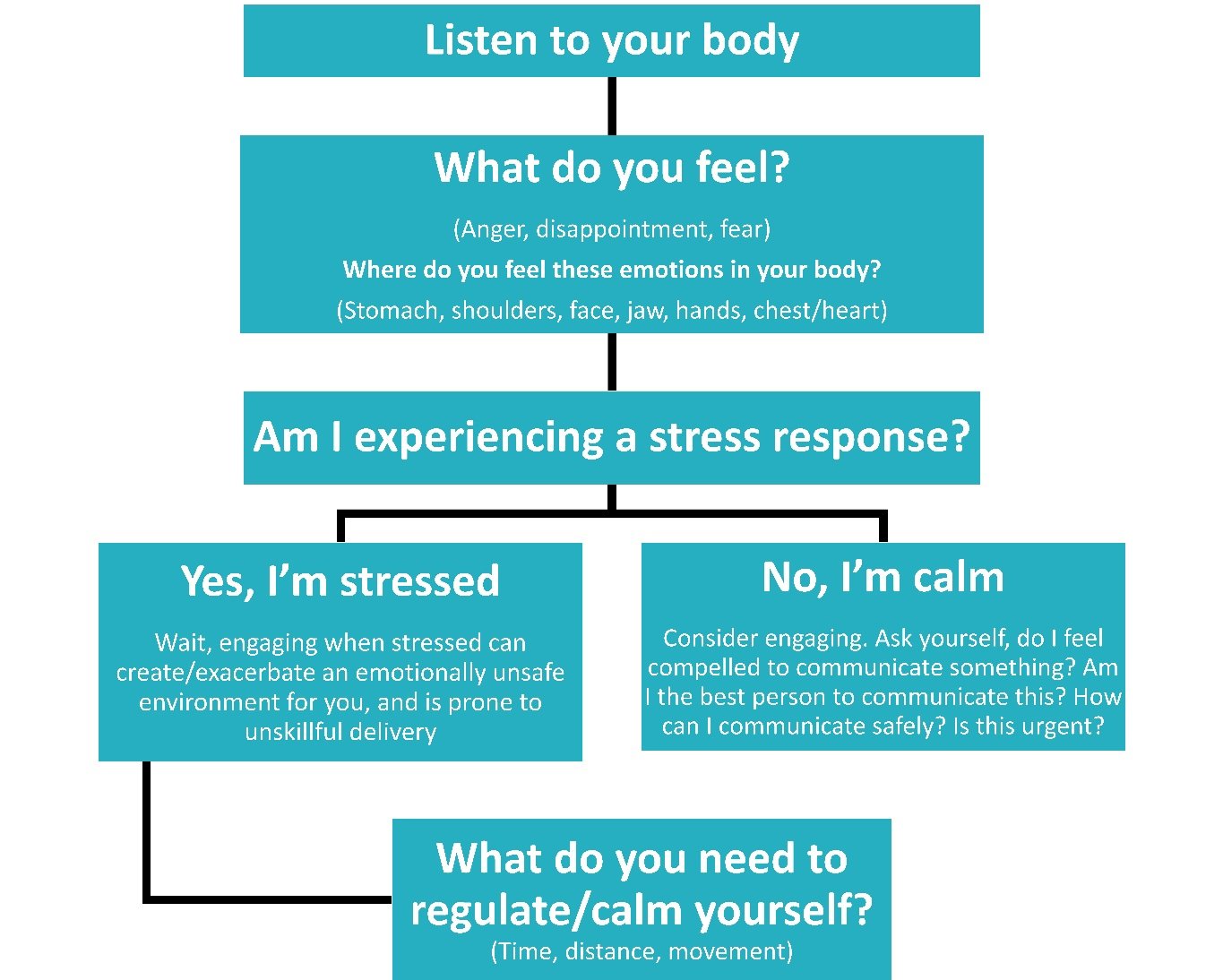
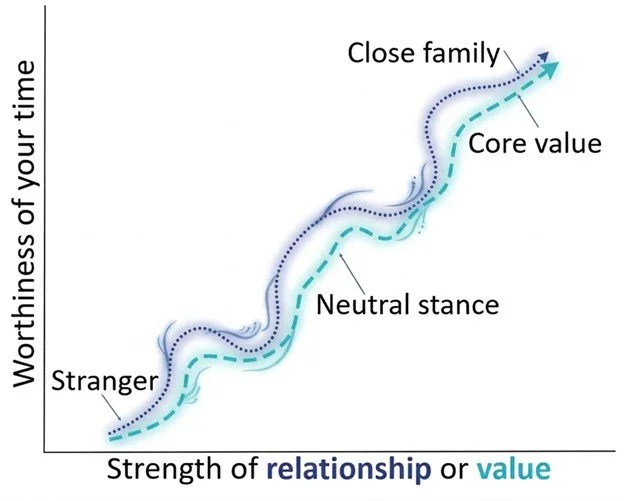
Figure 2. Conceptual “Worth your time” graph (Download Figure 2)
Poster
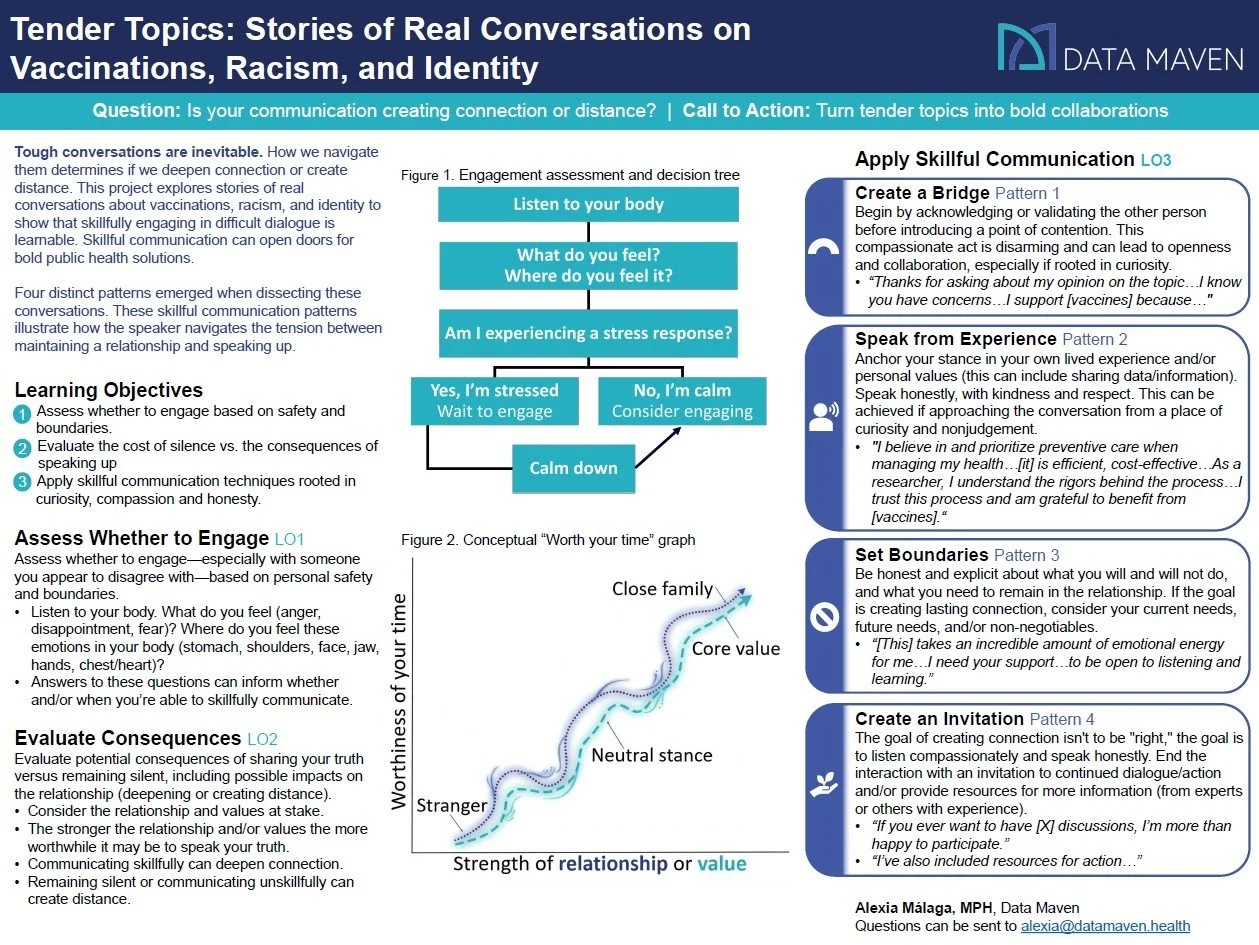
Tender Topics: Stories of Real Conversations on Vaccinations, Racism, and Identity (Download poster)
Alexia Málaga, MPH, Data Maven