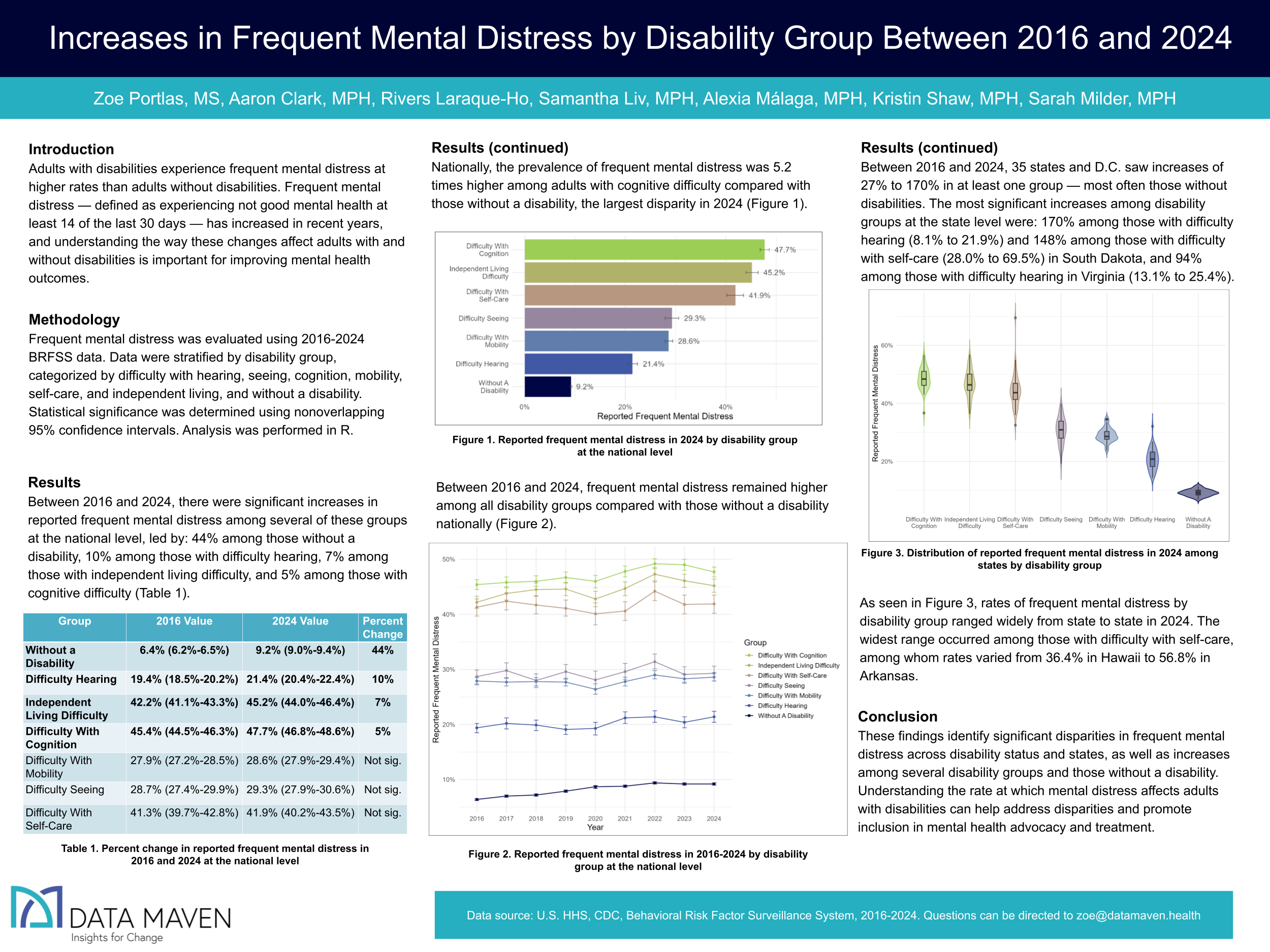
Increases in Reported Frequent Mental Distress by Disability Group Between 2016 and 2024
Zoe Portlas
2026 Council of State and Territorial Epidemiologists (CSTE) Annual Conference • Boston, MA
Background
Adults with disabilities experience frequent mental distress at higher rates than adults without disabilities. Frequent mental distress, defined as reporting/having not good mental health at least 14 of the last 30 days, has increased in recent years, and understanding the way these changes affect adults with and without disabilities is important for improving mental health outcomes.
Methods
Frequent mental distress was evaluated using 2016-2024 BRFSS data. Data were stratified by disability group, including difficulty with hearing, seeing, cognition, mobility, self-care, and independent living, and without a disability. Statistical significance was determined using nonoverlapping 95% confidence intervals. Analysis was performed in R.
Results
From 2016 to 2024, frequent mental distress remained higher among all disability groups compared with those without a disability in the United States. The prevalence of frequent mental distress was 5.2 times higher among those with cognitive difficulty compared with no disability, the largest disparity in 2024. At the state level, the highest disparities were: 13.6 times higher among those with self-care difficulty (69.5%) compared with no disability (5.1%) in South Dakota, 11.4 times higher among those with cognitive difficulty (51.3%) compared with no disability (4.5%) in Minnesota, and 10.9 times higher among those with independent living difficulty (52.3%) compared with no disability (4.8%) in North Dakota.
Between 2016 and 2024, there were significant increases in reported frequent mental distress among several of these groups, led by: 44% among those without a disability (6.4% to 9.2%), 10% among those with difficulty hearing (19.4% to 21.4%), 7% among those with independent living difficulty (42.2% to 45.2%), and 5% among those with cognitive difficulty (45.4% to 47.7%).
Between 2016 and 2024, 35 states and D.C. saw increases between 27% and 170% in at least one group, most often those without disabilities. The most significant increases among disability groups at the state level were: 170% among those with difficulty hearing (8.1% to 21.9%) and 148% among those with self-care difficulty (28.0% to 69.5%) in South Dakota and 94% among those with difficulty hearing (13.1% to 25.4%) in Virginia.
Conclusions and Public Health Impact
These findings identify significant disparities in frequent mental distress across disability status and states. Understanding the rate at which mental distress affects adults with disabilities can help address disparities and promote inclusion in mental health advocacy and treatment.